Pandora jewellery—also searched widely as Pandora jewelry—occupies a distinctive place between fine boutique goldsmithing and mass-market fashion accessories. The brand built a global following around modular charm bracelets, signature aesthetics, and accessible price points that make collecting feel personal rather than exclusive. Whether you spell it the British way ("jewellery") or the American way ("jewelry"), the practical questions are the same: How do Pandora charms work? What authenticity clues should you check? What are pieces typically worth used? How do you spot fakes? This educational guide answers those questions without claiming any affiliation with, endorsement by, or partnership with Pandora.
Jewelry Identifier: JewelValue is a helpful companion for owners sorting mixed boxes of branded and unbranded beads, evaluating thrift or marketplace finds, and documenting collections before resale or insurance conversations. Photo-based identification cannot replace manufacturer verification or professional appraisal, but it gives you a fast preliminary read on style family, metal appearance, and red flags worth investigating further. For a wider foundation on AI identification, see the Jewelry Identifier app guide and our walkthrough of identifying jewelry by photo.
Understanding the Pandora Brand and Product Ecosystem
Pandora emerged as a major charm-bracelet phenomenon by combining a consistent design language with an open-ended collecting model. Fans assemble bracelets over time, marking birthdays, travel, relationships, and milestones with individual charms. That narrative collecting habit—not only the metal content—explains much of the brand's cultural footprint. Secondary markets are full of both genuine retired designs and persuasive lookalikes, which is why authenticity literacy matters for buyers and sellers.
Core categories typically include charm bracelets (often in related metal finishes and some leather or alternative bases depending on era and line), individual charms and clips, rings, earrings, necklaces, and seasonal or collaboration collections. Within charms, styles range from polished metal motifs and enamel designs to pieces set with cubic zirconia or other simulated stones, and limited thematic drops that retire from active retail. Understanding category helps set value expectations: a common enamel charm in average condition behaves differently on the resale market than a scarce retired piece still sought by collectors.
It is important to separate brand storytelling from material class. Much Pandora jewellery is designed as fashion-forward branded jewelry rather than investment-grade high jewelry with substantial precious-metal premiums. Some collections use sterling silver, gold plating over silver, or other finishes marketed under brand naming conventions that change over product cycles. Always read hallmarks and product descriptions carefully rather than assuming every Pandora-branded item is solid high-karat gold. Material honesty protects both your budget and your listing accuracy if you resell.
Because Pandora jewellery is widely counterfeited, treat brand recognition alone as incomplete evidence. Packaging, dust bags, and certificates can be reproduced. Construction quality, hallmark correctness, clasp and thread engineering on bracelets, and consistent finishing on enamel edges usually tell a clearer story—especially when combined with careful photography in JewelValue for record keeping.
How Pandora Charms and Bracelets Work
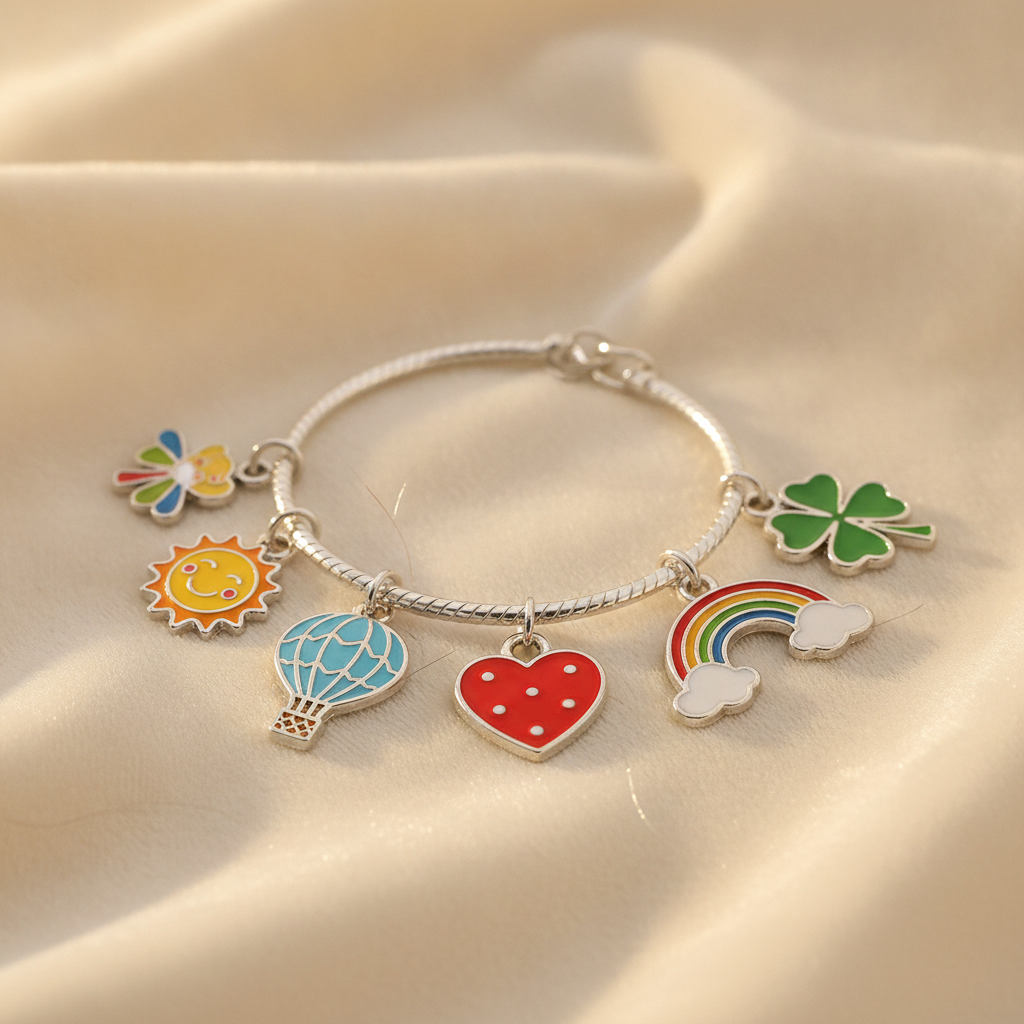
The appeal of Pandora-style collecting lies in modularity. Charms slide onto a bracelet, often with clips or stoppers used to create spacing and prevent bunching. Builders mix metal tone, enamel color, and thematic motifs into a wearable timeline. For identification and resale, that modularity means you should evaluate the bracelet base and each charm separately. A genuine bracelet with a mix of authentic and fake charms is common in secondary markets; the opposite also happens.
When photographing a charm stack for JewelValue, remove charms one by one when possible. Group photos are useful for inventory, but individual images reveal hallmark placement, stone settings, and enamel irregularities that stacked shots hide. Capture both sides of a charm, the bail or opening that contacts the bracelet, and any engraved logos or inventory-style codes. Soft natural light helps enamel and CZ flash without blowing out reflections.
Condition issues frequent to Pandora charms include enamel chips, worn plating on high-contact edges, loose simulated stones, scratched metal faces, and stretched or damaged bracelet threads or clasps. None of these alone proves a piece fake, but heavy defects change resale expectations dramatically. Collectors pay premiums for clean enamel and intact stones. Repair options exist through authorized and independent jewelers, yet replating and enamel restoration quality varies—budget accordingly and disclose prior repairs if you sell.
Sizing and compatibility historically matter within the Pandora ecosystem and among third-party charm makers who design beads to fit popular bracelet diameters. If you buy used charms online, confirm intended bracelet type and measure opening diameters against your bracelet. Poor fit can scrape finishes and signal non-original construction. JewelValue will not measure diameter for you, but clear side-profile photos help you compare visually against known genuine pieces you already own.
Clips and spacers deserve the same scrutiny as statement charms. Counterfeiters often invest more effort in large decorative beads and less in logo fidelity on smaller functional pieces. Check logos, metal color consistency across a set, and whether clips actually secure as designed.
Authenticity Marks and What to Check Closely
Authenticity review for Pandora jewellery is a multi-factor process. Start with hallmarks and stamped logos. Genuine pieces commonly show brand-related stamps and metal purity marks appropriate to the materials claimed—sterling indicators such as 925 for silver items are widely discussed among collectors, while plated or alloy pieces may show different markings depending on product line and year. Stamps should be crisp, appropriately sized, and positioned in expected places for the item type. Blurry, shallow, oddly fonted, or awkwardly placed marks are caution signals, especially when paired with rough finishing elsewhere.
Compare logo style carefully. Brand wordmarks and crown-style emblems (when present on a given era or product) should match known genuine examples from similar periods—not merely "look Pandora-ish." Counterfeits frequently use near-miss fonts, uneven spacing, or embossing that sits too proud or too faint. Photograph stamps with your phone's macro mode and save them in JewelValue so you can compare later without handling the piece repeatedly.
Examine construction. Genuine branded production typically shows consistent enamel fills, clean metal edges, balanced stone seats, and functional clasps. Fakes may reveal glue residue around stones, lumpy enamel, sharp flashing from poor casting cleanup, mismatched color plating, or bracelets whose threading and clasp engineering feel crude. Weight can be a clue when you compare against a known authentic charm of similar size, though weight alone is not proof.
Packaging and paperwork are secondary evidence. Boxes, pouches, and cards are easy to source or counterfeit. A complete retail presentation raises confidence only when the jewelry itself passes inspection. Conversely, authentic charms sold loose without boxes are extremely common on secondary markets; missing packaging is not automatic proof of a fake.
Be wary of deals that are dramatically below typical secondary prices for a sought-after retired design in excellent condition. Fraud markets thrive on urgency and bargain hunting. If a marketplace seller refuses additional hallmark photos, that refusal is informative. Our jewelry appraisal guide explains when professional valuation is warranted beyond DIY authenticity checks—usually when a large collection or rare set has material financial stakes.
JewelValue can flag stylistic consistency issues and help catalog stamp photos, but it does not issue brand certificates. Use the app as your first pass, then escalate questionable pieces to a knowledgeable local jeweler or authorized service path when confirmation would change a purchase or sale decision.
What Pandora Jewellery Is Typically Worth
Value depends on authenticity, metal content, condition, rarity/retirement status, completeness of matching sets, and market demand—not retail price paid years ago. New-in-box prices and secondary-market prices are different worlds. Many owners are surprised that common open-edition charms in worn condition sell for a fraction of original receipts, while certain retired designs in excellent condition may command stronger collector interest.
Metal contribution sets a floor for some sterling silver items, but design and brand demand usually drive more of the price than melt value alone for small charms. Heavily worn plating, damaged enamel, and missing stones depress offers quickly. Bracelet bases have their own secondary markets; complete curated stacks sometimes sell better as themed lots, while mixed unknown beads often sell more efficiently charm-by-charm after sorting.
When evaluating inherited Pandora jewellery, inventory with JewelValue first. Separate obvious fashion-adjacent beads from hallmark-bearing candidates, note condition, and research recent sold listings—not asking prices—for comparable designs. Sold data from reputable marketplaces and collector communities beats anecdotal "someone told me it's worth..." claims. For metal confirmation on unmarked or worn pieces, combine visual ID with professional testing when the potential difference between silver, plated, and non-precious base metal would change your decision. Our gold jewelry identification guide covers general metal literacy that also helps you interpret plated versus solid claims on branded fashion jewelry.
Insurance replacement thinking differs from resale thinking. Replacement cost for a sentimental stack you would rebuild at retail is not what a buyer will pay for your used set. If you insure, discuss valuation purpose with a qualified appraiser and document each charm. If you sell, price for liquidity and condition honesty.
Pandora jewellery is generally best understood as wearable branded collecting, not as a primary financial investment comparable to high-karat gold coins or certified natural diamonds. Enjoy the storytelling value; treat monetary expectations with realism.
Detecting Fake Pandora Jewelry: Common Red Flags
Fake Pandora jewellery (and fake Pandora jewelry listings) typically combine several tells. Logo and hallmark errors are the most discussed: incorrect spelling, crude crowns, misplaced 925 stamps, or stamps that look acid-etched poorly into soft metal. Compare against a verified authentic piece whenever you can.
Construction shortcuts appear as rough seams, poorly finished charm openings that snag bracelets, stones set with visible adhesive, thin plating that chips quickly, and enamel that pits or flakes soon after light wear. If a "new" charm already shows plating wear at edges while the seller claims storage-only history, question the story.
Seller behavior provides soft signals. Listings with stock photos only, refusal to show hallmarks, pressure to buy immediately, inconsistent brand terminology, and prices far below market for desirable retired designs deserve caution. For in-person flea-market purchases, bring a known authentic charm for side-by-side feel and finishing comparison when practical, and photograph everything with JewelValue before handing over cash if you proceed.
Mix-and-match authenticity is a special trap. Counterfeiters know buyers focus on the large heart or travel charm and ignore stoppers. Evaluate every component. A stack that "looks Pandora" from across a table can include multiple fakes that reveal themselves only under magnification.
Remember that lookalike third-party charms exist legally as independent designs meant to fit popular bracelet formats. Those are not Pandora products even when they sit next to authentic beads. Mislabeling third-party beads as branded originals in a sale listing is a integrity problem; buyers should read titles carefully, and sellers should describe accurately. JewelValue helps you organize categories and notes so your own inventory stays honest.
When stakes are higher—bulk lots, expensive retired sets, or pieces you plan to gift as authentic—escalate beyond photo AI. A careful jeweler examination, hallmark review, and marketplace sold-price research form a stronger decision set than any single clue.
Using JewelValue with Pandora Collections
Jewelry Identifier: JewelValue supports Pandora jewellery owners in several practical ways. First, documentation: photograph each charm and bracelet, save notes about purchase year, occasion, and known authenticity status, and keep hallmark close-ups together with the item. Digital catalogs are invaluable for insurance conversations, estate discussions, and selling individually without losing track of which bead is which.
Second, triage: when you inherit a mixed jewelry box containing branded charms, unmarked beads, and unrelated fine jewelry, JewelValue helps sort categories quickly so you prioritize what needs professional attention. Antique or solid-gold pieces mixed in with fashion charms should not be priced with the same assumptions—see also our antique jewelry identification guide if period pieces appear in the same inheritance.
Third, education: comparing genuine and questionable photos over time trains your eye. The app's educational context around metals, settings, and visual clues reinforces habits that transfer beyond any single brand.
JewelValue does not replace Pandora customer service, authorized authenticity confirmation, or formal appraisal. It is a preliminary photo intelligence layer. Used that way, it reduces expensive mistakes—overpaying for fakes, underpricing true complete sets, or sending costume lots to appraisers unnecessarily.
Frequently Asked Questions
Is it "Pandora jewellery" or "Pandora jewelry"?
Both are correct in different English conventions. "Jewellery" is the preferred spelling in British and many Commonwealth contexts; "jewelry" is standard in American English. Search interest exists for both, and product reality is the same. Use whichever spelling fits your audience, and evaluate authenticity by hallmarks and construction rather than spelling debates.
How can I tell if a Pandora charm is real?
Check hallmarks and logos for crisp, correct branding and appropriate metal marks; inspect enamel, stone setting, and finishing quality; compare against known authentic examples; and treat packaging as secondary evidence. Photograph stamps with JewelValue for your records. For high-value or bulk purchases, seek knowledgeable in-person verification rather than relying on photos alone.
Do Pandora charms hold their value?
Some retired designs in excellent condition retain stronger collector demand, while common open-edition charms often resell well below original retail—especially with wear. Value tracks authenticity, condition, scarcity, and demand more than sentimental retail history. Document your collection and research recent sold prices before setting expectations.
Can JewelValue authenticate Pandora jewellery officially?
No. JewelValue provides AI-assisted visual identification and educational guidance from photographs. It can help you spot inconsistencies and organize evidence, but it does not issue brand authenticity certificates. Use it as a first pass, then escalate when confirmation would change a purchase, sale, or insurance decision.
Should I clean Pandora charms before photographing or selling them?
Gentle cleaning that removes oils and dust usually improves both photographs and presentation. Avoid harsh chemicals and abrasive polishes that damage enamel, plating, or simulated stones. Dry thoroughly. If a piece is valuable and fragile, ask a jeweler about safe methods. Clear JewelValue photos before and after cleaning help document condition for buyers.
Download Jewelry Identifier: JewelValue Today
Whether you call it Pandora jewellery or Pandora jewelry, collecting charms is more rewarding when you can separate genuine pieces, fair secondary prices, and convincing fakes. Jewelry Identifier: JewelValue helps you photograph, sort, and study your bracelets and beads with clearer eyes—without claiming any affiliation with the Pandora brand.
Build a charm-by-charm catalog, capture hallmarks before you buy or sell, and approach marketplace deals with better questions.
Download Jewelry Identifier: JewelValue on the App Store and start documenting your Pandora collection with confidence today.