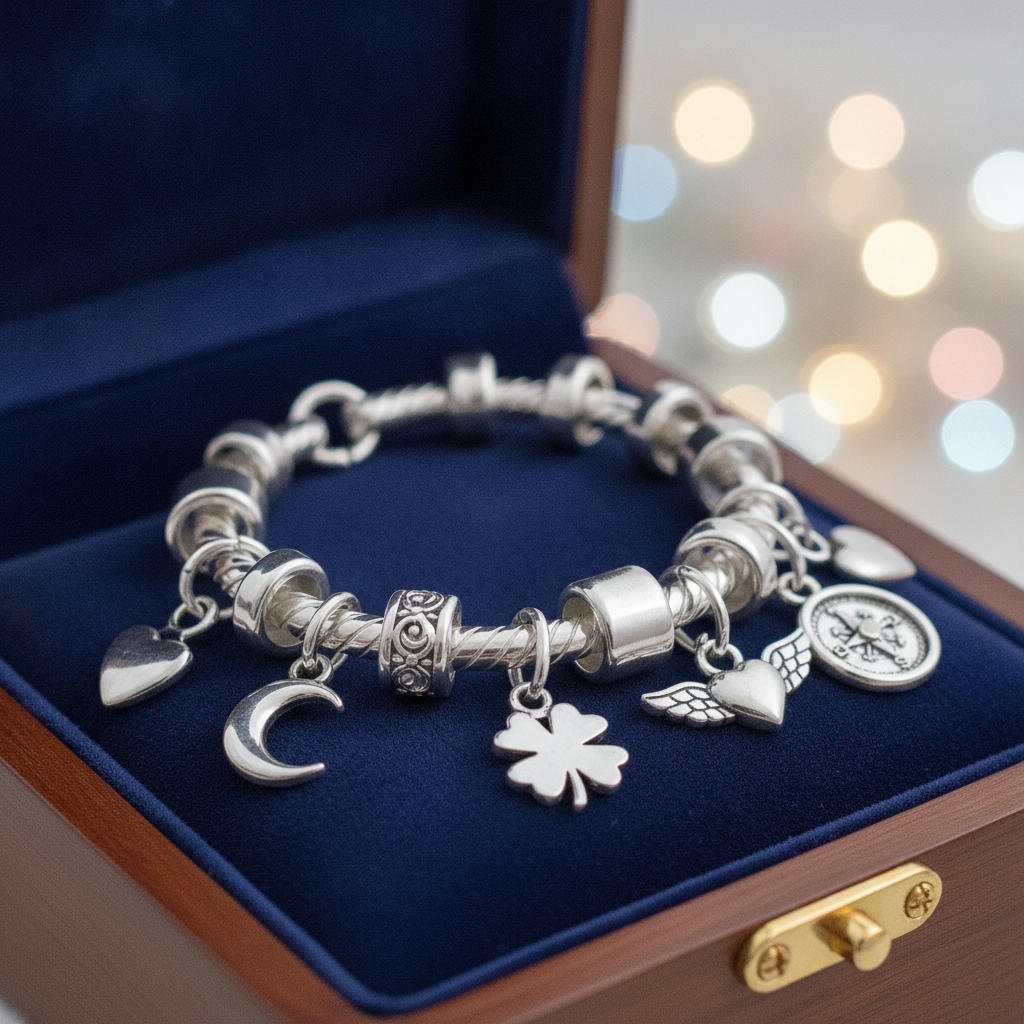
Pandora bracelets are among the most collected and most frequently questioned jewelry pieces in estates, thrift finds, and online resale lists. A single bracelet can hold decades of personal milestones through interchangeable charms, or it can be an empty starter band waiting for someone who never finished the story. Whether you inherited a loaded charm bracelet, bought a used one online, or found an unmarked piece that looks like Pandora, knowing how to identify authenticity, materials, sizing, and market value protects both your budget and your expectations. This guide focuses specifically on Pandora-style charm bracelets and how Jewelry Identifier: JewelValue helps you evaluate them from photographs—without any brand affiliation or endorsement.
Pandora popularized the modern charm bracelet as modular storytelling jewelry: a core bracelet (often a snake chain or linked band) designed to hold threaded charms, clips, and safety chains. The category expanded into dozens of bracelet constructions, materials from sterling silver to rose gold–plated alloys, and thousands of charm themes. That popularity also created a large counterfeit market. Visually similar bracelets and loose charms circulate widely on marketplace apps, estate lots, and “designer-looking” fashion jewelry trays. Learning the construction details that distinguish genuine Pandora bracelets from lookalikes—and understanding how secondary-market value really works—matters more than brand logos alone.
If you are sorting a jewelry box or preparing pieces for sale, start with photo documentation. A clear set of images of the bracelet clasp, interior stamps, charm threading, and stone appearance gives you a durable record. JewelValue can analyze those photos for metal appearance, construction type, and likely materials, then point you toward when a professional appraisal or laboratory check is worth the fee. For broader process tips, see our guide to identifying jewelry by photo and the overview of how jewelry identifier apps work.
Pandora Bracelet Styles and Constructions
Not every Pandora bracelet is the classic snake chain. Understanding construction helps you identify the era of a piece, estimate replacement cost, and spot incomplete or heavily modified bracelets. The iconic Moments snake chain is a flexible, tubular-looking chain with a lobster or fold-over style clasp (designs vary by season and metal), designed so charms slide on from the open end. Many collectors still think of “a Pandora bracelet” as this single design, but the ecosystem also includes bangles, leather bracelets with clip systems, mesh designs, sliding bracelets with adjustable cords, and open-ended styles intended for fewer, larger charms.
When examining an unmarked bracelet that resembles Pandora, note how charms attach. Thread-on designs require an opening at the clasp end and enough clearance for hollow or solid cores to slide. Clip charms sit between others as spacers and safety stops. Some newer systems use different locking methods than early snake chains. Fashion imitators often copy the look of a filled snake chain without matching Pandora’s packaging, stamp locations, or clasp machining. Weight can be a useful clue: a fully loaded genuine sterling bracelet feels denser than lightweight base-metal copies with hollow charms, though hollow genuine charms also exist—so weight alone never proves authenticity.
Bracelet “families” also affect what charms fit. Mixing systems indiscriminately can force charm cores or warp links. If you inherited a mixed tray of charms and multiple bracelets, sort by threading diameter and stop style before assuming everything belongs together. Photograph each bracelet empty and loaded. JewelValue’s material and style suggestions from photos help you group pieces by metal tone (yellow, rose, white/silver) and construction, which is especially useful when a lot arrives tangled or partially disassembled.
Finish and plating matter for identification and care. Solid sterling silver bracelets oxidize and polish differently from gold-plated sterling or base metals with thin flash plating. Rose gold–tone pieces often show plating wear at high-contact points along the clasp and outer curve of the wrist. Heavy wear with bright white metal showing through a “gold” bracelet can indicate plating rather than solid karat gold. Pandora and similar charm systems are most commonly sterling silver–based in consumer collections; solid high-karat gold Pandora pieces exist but are less common in typical estate finds, so claims of “solid 18K entire bracelet” deserve extra scrutiny and hallmark confirmation.
Understanding Charms, Clips, and Safety Chains
Charms are the storytelling engine of a Pandora-style bracelet. They range from enamel figurative pieces (animals, travel icons, seasonal motifs) to openwork metal shapes, birthstone dangles, and pavé-style crystal or cubic zirconia accents. Identification of a bracelet often depends on reading the charms: theme consistency, core style, and maker stamps on individual charms. Many genuine charms carry internal marks on the core or ring; counterfeit charms often omit marks, use messy lettering, or place marks inconsistently.
Clips (sometimes called spacers in casual speech) serve both aesthetics and security. Placed near the clasp or between clusters, they help prevent charms from sliding into the clasp mechanism and reduce wear on a single contact point. A bracelet with dozens of charms and no clips may be incomplete or worn in a way that increases loss risk. Safety chains connect near the clasp as a backup if the main clasp opens. Missing safety chains are common on used bracelets and do not automatically mean the bracelet is fake—but a brand-new listing photographed with generic charms and no clasp stamps is a pattern worth questioning.
Murano-style glass and enamel finishes deserve careful photography. Genuine glass and enamel usually show depth and intentional color boundaries; cheap painted metal can chip into flat base color under light. Capture close-ups of enamel edges and glass junctions. When stones are present, note whether they sit in tight settings or appear glued into shallow cups. Costume simulants are common in charm categories at every authenticity level; the right question is often “what materials are here?” rather than “is every stone precious?” JewelValue helps frame that material question from photos, then you decide how deep professional testing should go for high-ticket claims.
Dangle charms introduce another identification angle: bail construction and movement. Well-made dangles articulate smoothly; poorly made copies may snag or have rough solder joints. Photograph hang points and any joints that look re-soldered. Estate bracelets frequently include repaired or replaced clasps; a mismatched clasp style relative to the chain era is not automatically inauthentic, but it affects collectible desirability and should appear in any sale description.
How to Check Pandora Bracelet Authenticity
Authenticity for charm bracelets is a bundle of evidence, not a single stamp. Start with the bracelet’s interior or clasp hallmarks. Many genuine pieces carry metal stamps such as “925” or “ALE” alongside brand-related markings (marking conventions have varied over time and by product line). Counterfeiters copy popular stamps, so stamp presence is necessary but not sufficient. Compare stamp sharpness under magnification: genuine stamps tend to be clean and consistently placed; fake stamps may look shallow, uneven, or placed awkwardly near a seam.
Next, evaluate machining and clasp feel. Genuine clasps usually close with a secure, intentional click and show relatively clean finishing on the moveable parts. Extremely rough file marks, razor-sharp edges that catch skin, or glue residue near “crystal” settings are warning signs on any brand-lookalike bracelet. Look at the ends of the snake chain where charms thread: uneven openings, deformed coils, or charms that barely fit suggest either damage or non-compatible systems. Photograph the clasp open and closed, plus any interior stamps, then run those images through JewelValue for a structured first pass on metal appearance and construction category.
Charm-by-charm inspection matters when buying a “loaded” bracelet. Sellers sometimes mix genuine bracelet bases with cheaper filled charms—or vice versa. Check whether charm themes look mass-printed with incorrect proportions compared to well-known designs, whether enamel colors bleed, and whether cores show repeatable maker marks. Packaging and authenticity cards can be forged as easily as charms; treat boxes and booklets as supporting context, not proof. Receipts with store details and dates are more useful when they match the metals and styles present.
Be honest about limits. Photo identification and stamp reading can strongly support or challenge authenticity claims, but contested high-value lots may still need an experienced reseller or jeweler familiar with Pandora’s product evolution across years. That is parallel to the distinction discussed in our jewelry appraisal guide: preliminary identification sorts and educates; formal appraisal documents value for insurance or dispute contexts. JewelValue is ideal for the first stage—especially when you have multiple bracelets and need triage before paying for professional time.
Sizing, Fit, and Wearability
Bracelet sizing determines comfort and whether charms sit correctly. Snake-chain charm bracelets commonly come in length options roughly spanning small wrists through larger fits (exact size charts vary by product and era). A bracelet that is too small will force charms into a cramped arc, increase skin pinching, and stress the clasp. A bracelet that is too large will slide toward the hand, stack charms loosely at the bottom, and raise the chance of catching on sleeves. Many wearers prefer a fit that sits above the wrist bone with a small amount of movement rather than a dangling cuff effect.
When evaluating a used Pandora bracelet, measure end-to-end with the clasp closed (or note the stamped size if present) and compare against the intended wearer’s wrist circumference plus clearance for charms. A fully loaded bracelet needs more space than an empty band. If you are photographing for identification or sale, include a ruler or known coin in one frame so scale is clear—this also helps apps and buyers understand whether you have a short bracelet overloaded with charms or a longer bracelet with room to spare. JewelValue benefits from well-lit, scale-aware images when suggesting likely jewelry categories.
Sizing adjustments are not always freeform. Unlike some tennis bracelets where links are removed symmetrically, snake-chain styles may require specific extender options, replacement in a new size, or retailer assistance rather than DIY cutting. Leather and cord styles may offer different adjustment mechanisms (sliding knots, multiple holes, or buckle systems). Identify the type before assuming a jeweler can shorten it the way they would a simple curb chain. Damage from attempted home resizing—stretched coils, cut links, or glued “repairs”—hurts both authenticity confidence and resale.
Comfort red flags also inform identification. Green or black skin discoloration can come from alloys reacting with sweat and lotions; it does not uniquely prove “fake,” but rapid, severe reaction on a supposedly “pure” claim warrants material testing. Itching from rough clips or sharp crystal settings suggests finishing quality issues. Photograph any corrosion, plating loss, or clasp deformation—these condition notes belong in any honest listing and affect how JewelValue contextualizes value ranges for similar pieces.
Spotting Fakes, Reproductions, and Misleading Listings
The counterfeit and “inspired by” market for charm bracelets is large because average selling prices are accessible and brand recognition is high. Common patterns include: bracelets sold as authentic with fuzzy photos of stamps; charm lots advertised as “Pandora compatible” quietly edited in titles later; and mixed lots where one stamped charm stands next to unmarked copies. Another pattern is packaging theater—authentic-looking boxes with unrelated contents.
Optical and manufacturing tells still help. Overly bright, uniform “diamonds” on low-cost listings are often glass or CZ in soft settings. Logos that look slightly wrong in kerning or placement deserve close-ups. Charms with soft, mushy detail (especially faces, lettering, and small floral edges) often indicate worn molds or cheap casting. Magnetic attraction on a bracelet marketed as solid sterling or gold can indicate steel components or iron-heavy base metals (though clasps can contain mixed parts—test carefully and interpret cautiously). Use a simple magnet only as one clue, never as a courtroom verdict.
Online listing language is its own red flag system. Phrases like “authentic quality,” “same factory,” or prices far below typical secondary-market comps for a fully loaded sterling bracelet deserve skepticism. Ask for clasp-open photos, size confirmation, and charm-by-charm marks. Compare against sold listings of similar authenticity and filling level. If a seller refuses clear hallmark photos, walk away—there will always be another bracelet.
JewelValue is particularly useful here because it forces a materials-first conversation. Instead of arguing about brand romance in a listing title, you photograph the bracelet and ask what the metals and stones are likely to be. That mindset matches how careful collectors buy: identity materials, verify construction, then decide whether brand premiums are supported by evidence. Pair app results with marketplace due diligence and, when money involved justifies it, an in-person inspection.
Value, Resale, and When to Get a Formal Appraisal
Pandora bracelet value on the secondary market depends on metal, completeness, charm desirability, condition, and authenticity confidence—not on the original retail “stack price” someone paid over years of gifts. Empty starter bracelets in sterling often sell for modest amounts relative to retail. Rare retired charms in excellent condition can outperform common seasonal charms. Heavily worn plating, missing stones, damaged clasps, and unauthenticated status all reduce offers from informed buyers.
Think in layers. Melt or scrap value for sterling components is a floor in poor cosmetic condition, but charming bracelets usually trade above scrap when wearable and complete. Fashion-plated pieces may have near-zero metal value and sell purely on design appeal. Brand premium collapses quickly when authenticity is doubted. That is why documentation—photos, stamps, purchase records—matters as much as sparkle. For insurance or estate distribution on higher-value authentic collections, move beyond comps into formal appraisal methodology described in our jewelry appraisal guide.
Pricing strategy for sellers should separate the bracelet base from notable charms when helpful. Bundling everything can hide star pieces; separating can increase total return but requires more listing work. Disclose repairs, replacements, and mixed authenticity honestly. Buyers using JewelValue on your listing photos will notice inconsistencies anyway; transparency builds trust and reduces returns.
For estates, triage with photos first. Photograph each bracelet, run preliminary identification with JewelValue, set aside likely authentic high-fill sterling pieces for professional review, and group obvious fashion jewelry for faster liquidation. This approach saves appraisal fees for pieces that cannot support them. Remember that sentimental value is real but separate from market value—families should decide deliberately which pieces stay for memory and which enter the market.
Caring for Pandora-Style Charm Bracelets
Charm bracelets accumulate lotion, soap film, and skin oils in every gap between charms. Periodic gentle cleaning preserves both appearance and clasp function. Use lukewarm water, mild soap, and a soft brush, then dry thoroughly—trapped moisture accelerates tarnish on silver. Avoid harsh dips that can damage enamel, adhesives, or plated finishes. Ultrasonic cleaners are risky for assembled charm bracelets with mixed materials; when in doubt, clean by hand or ask a jeweler familiar with fashion and bridge jewelry.
Storage should prevent tangling and scratching. Lay bracelets flat or hang individually; do not toss multiple loaded bracelets into one pouch. Remove bracelets for swimming, showering, gym workouts, and heavy household chores. Chlorine and abrasive surfaces destroy plating and stress clasps. Softish stones and enamel chips from impact; treat loaded bracelets as delicate even when the marketing language says “everyday wear.”
Annual clasp checks prevent loss. A worn clasp spring or loose jump ring is cheaper to fix than replacing a sentimental charm that slipped off in a parking lot. If you document your pieces with JewelValue after cleaning, you maintain an updated visual inventory useful for insurance claims and estate lists.
Frequently Asked Questions
How can I tell if a Pandora bracelet is authentic?
Combine clasp and bracelet hallmarks, construction quality, and charm-core marks. Look for clear, consistently placed metal stamps, a secure well-finished clasp, and charms that fit the bracelet system without forcing. Packaging alone is not proof. Photograph stamps and construction details, then use JewelValue for a materials and style reality check before paying brand-level prices. When a lot’s value is high, confirm with a jeweler or experienced reseller who handles authentic Pandora regularly—this guide is educational and not brand-affiliated.
What metal are most Pandora bracelets made from?
Many consumer Pandora-style bracelets encountered in everyday collections are sterling silver (often marked 925), sometimes with gold or rose plating over silver. Solid karat-gold lines exist at higher price points but appear less often in typical thrift and estate lots. Base-metal fashion copies may only be plated. Always verify with stamps plus visual wear patterns; JewelValue helps estimate metal category from photos when marks are worn or hard to read.
How should a Pandora charm bracelet fit?
Aim for secure placement above the wrist bone with room for charms to sit without crushing against the clasp. Too-tight bracelets pinch and accelerate clasp wear; too-loose bracelets rotate and catch on clothing. Account for charm volume—loaded bracelets need more circumference than empty ones. Measure wrist size and compare against the bracelet’s length with clasp closed. Include a scale object in photos when selling so buyers understand fit.
Are fake Pandora bracelets easy to spot?
Some fakes are obvious (mushy casting, wrong proportions, absurd prices, no stamps). Others copy stamps and packaging well enough to fool casual buyers. Treat authenticity as a pattern of evidence: marks, machining, charm quality, seller history, and price relative to comps. Photo identification with JewelValue reduces material misrepresentation even when brand claims remain contested.
Does a Pandora bracelet hold value?
Secondary-market value is typically well below original retail totals, especially for common charms and worn plating. Desirable retired charms, excellent condition, and confident authenticity support stronger resale. Scrap value can floor damaged sterling pieces. For insurance or estate splits on significant collections, pair JewelValue inventory photos with a formal appraisal when needed.
Download Jewelry Identifier: JewelValue Today
Pandora-style bracelets mix personal history with real identification challenges—metals, charms, fakes, and fair pricing. Jewelry Identifier: JewelValue helps you analyze bracelet photos for materials and construction context so you can buy, sell, insure, or simply understand what you own with clearer eyes.
Download Jewelry Identifier: JewelValue on the App Store and start identifying your charm bracelets today.