Luxury jewelry sits at the intersection of material rarity, craftsmanship, design authorship, and cultural prestige. Shoppers researching luxury jewelry, fine jewelry, and high jewelry often want a clearer map: What separates a solid gold diamond ring from a plated fashion statement? Why do some signed pieces command premiums far beyond metal weight? How should authentication and valuation work before a major purchase? This guide explains those distinctions in educational terms, surveys how designer marques fit the landscape without acting as a brand directory, and shows where photo AI tools like Jewelry Identifier: JewelValue provide useful preliminary checks—never as a substitute for laboratory reports or specialist authentication.
Luxury markets reward literacy. The more precisely you understand quality factors, paperwork norms, and red flags, the harder it is for marketing language alone to set your budget. Pair that literacy with careful photography, second opinions, and the right professional for the piece, and high-consideration jewelry buying becomes a manageable process rather than a leap of faith.
Fine Jewelry, Fashion Jewelry, and High Jewelry Explained
Fine jewelry generally refers to pieces made predominantly from precious metals—typically gold, platinum, or sometimes palladium—and set with natural gemstones of meaningful quality, though definitions vary by retailer and region. Legal metal standards (for example, minimum karat thresholds for calling a piece "gold" in certain markets) create a baseline, while gem quality, craftsmanship, and brand positioning create the spectrum above that baseline. Fine jewelry is built to last, be resized carefully, and hold secondary-market interest tied to materials and design.
Fashion jewelry (sometimes called costume jewelry) prioritizes look, trend, and accessible price. Base metals, plating, glass, acrylic, and simulated stones are common. Fashion pieces can be beautifully designed and emotionally valuable; they are simply a different material and durability class. Confusing the two categories—either overpaying for fashion sold with fine rhetoric, or underestimating a discreet fine piece mixed into a thrift lot—is a frequent costly mistake. JewelValue helps with first-pass category sorting from photographs so you know which items deserve loupe time and which are likely fashion.
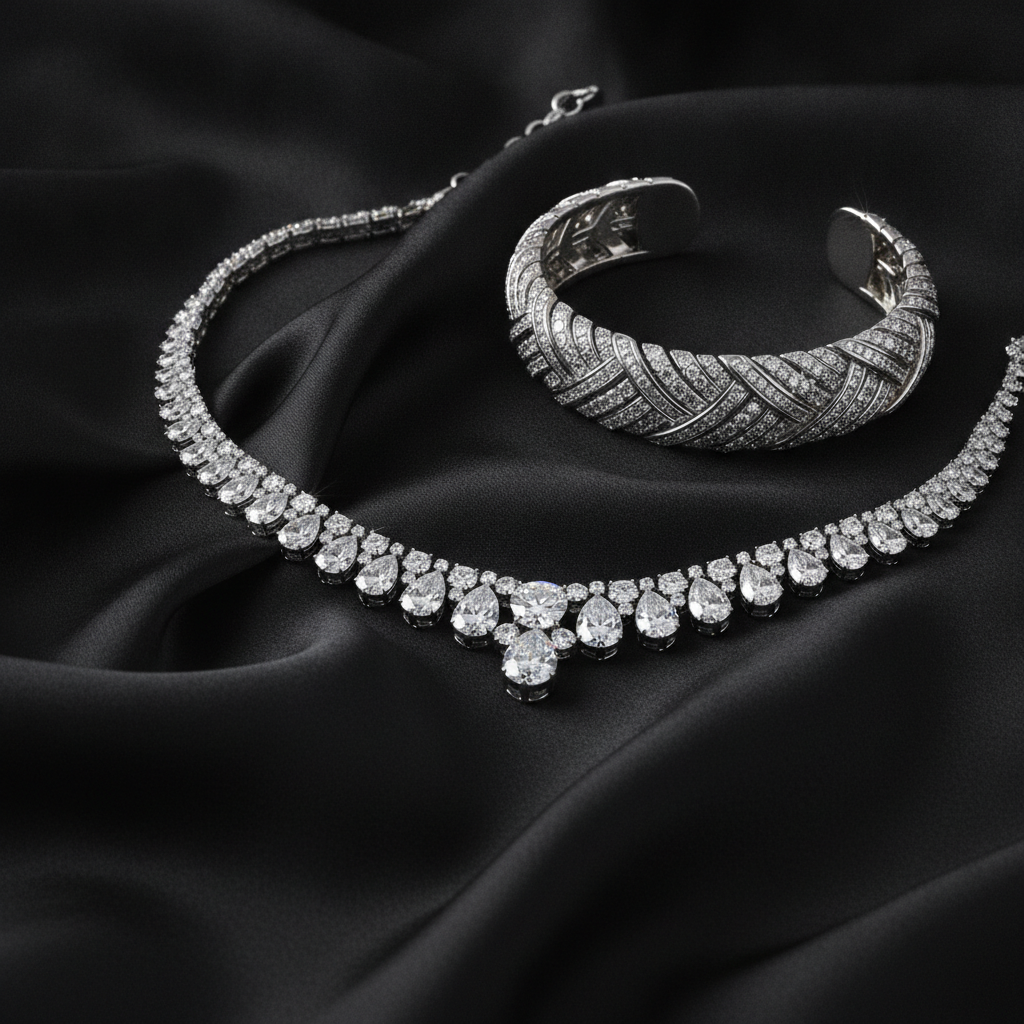
High jewelry (often associated with the French term haute joaillerie) sits at the top of the luxury pyramid. These are exceptionally crafted, often one-of-a-kind or very limited pieces featuring rare gemstones, complex settings, and atelier-level finishing from major maisons or elite independent houses. High jewelry is defined as much by artistry and exclusivity as by raw materials. Prices reflect design authorship, stone pedigree, and brand cachet in ways that scrap-metal math cannot capture.
Luxury jewelry as a consumer phrase overlaps both fine and high jewelry and sometimes includes entry-level pieces from prestigious brands that still sit above mass fashion. Focus less on the adjective and more on durable facts: metal purity, stone identity and treatment status, craftsmanship quality, provenance, and documentation.
What Defines Luxury Beyond Price Tags
Price alone is a poor definition of luxury. A heavily marketed plated necklace can cost more than a simple handmade 14K band. Better luxury signals include material integrity (verified precious metals and gemstones), finishing quality under magnification, thoughtful proportions and wearability, design coherence, and—for branded works—authentic maker's marks with supporting paperwork when appropriate.
Craftsmanship shows in prong symmetry, clean galleries, secure stone seating, polished interiors that do not abrade skin, and settings engineered for the stone's hardness and cleavage risks. Luxury ateliers invest hours invisible to a casual glance. Learning to notice those details, even at a basic level, improves every store visit.
Provenance and storytelling matter more at the high end. A diamond with a respected laboratory report, a colored gemstone with documented origin and treatment disclosure, or a vintage signed piece with ownership history can justify premiums over visually similar undocumented items. Luxury buyers pay for reduced uncertainty as much as for sparkle.
Brand and maison prestige amplify value when authenticity is secure. Signed Cartier, Tiffany, Van Cleef & Arpels, Bulgari, Harry Winston, and other internationally recognized names (among many others) carry secondary-market recognition that unsigned comparable designs may lack. Educational overview does not imply endorsement, ranking, or affiliation; it simply acknowledges how collector and reseller markets behave. Counterfeit risk rises with prestige, so authentication discipline must rise too.
For inherited pieces that may be antique rather than contemporary luxury, period construction can itself be a luxury attribute. Our antique jewelry identification guide covers era cues that intersect with fine jewelry collecting.
Designer Marques: An Educational Overview
Major jewelry maisons built reputations across decades or centuries through distinctive design languages, quality control, and carefully managed retail experiences. An educational overview helps buyers recognize why "signed" can matter without turning shopping into logo chasing.
Some houses are historically associated with iconic motifs and high jewelry exhibitions; others popularized accessible luxury bridal or everyday fine pieces; still others specialize in colored gemstones, watch-jewelry crossovers, or regionally strong craft traditions. Independently, outstanding goldsmiths and gem artists produce unsigned or lightly signed work whose luxury is craft-first rather than logo-first. Both paths are legitimate. Your criteria should match your goals: wearability, investment liquidity, sentimental design, or collectible scarcity.
When evaluating any branded luxury jewelry claim, verify the physical mark quality, compare construction to known authentic examples, and seek specialist authentication for high-value candidates. Retail receipts, service records, and original boxes help but can be forged. Laboratory reports for major diamonds and important colored stones are separate from brand authentication—you often need both.
JewelValue can support preliminary style-family recognition and metal/stone visual hypotheses from photos, which is useful for estate sorting before you hire a specialist. It does not authenticate designer marques. Treat app output as a research briefing for the experts you consult next. Broader tool context lives in our Jewelry Identifier app guide.
Secondary markets—authorized pre-owned programs, reputable auction houses, estate jewelers, and specialist dealers—each have different buyer protections. Luxury purchases outside brand boutiques should include written condition reports, return policies where offered, and clarity on whether diamonds have reports. "Too good to be true" pricing on famous signatures is a classic fraud lure.
Authentication Practices for Luxury and Fine Jewelry
Authentication is layered. Start with visual and tactile inspection: hallmark correctness, maker's marks, construction consistency, wear patterns that match age claims, and stone behavior under basic observation. Magnification reveals tool marks, cast porosity, and setting quality that phone cameras may only partially capture—but strong macro photos still help remote specialists triage.
Next comes instrumental examination when stakes justify it: metal testing, gemological identification of refractive index and spectroscopy markers, diamond grading verification, and detection of treatments or synthetics. A sapphire that looks luxurious under boutique lighting may be glass, synthetic corundum, or heavily treated material. Disclosure norms in ethical fine jewelry require treatment transparency because treatments affect value.
For branded luxury jewelry, specialist authenticators and brand service networks (where available for the house and item type) provide the strongest confirmation. Auction houses and established estate dealers have in-house expertise for many marques. Choose professionals with reputable track records and ask about fees and turnaround before shipping irreplaceable items.
Paperwork review is its own skill. Laboratory reports should match the stone's measurements and characteristics; mismatched reports are a known scam vector. Appraisals should state purpose—insurance replacement versus fair market—and credentials. Our jewelry appraisal guide unpacks valuation types so luxury buyers do not confuse a lofty replacement appraisal with resale reality.
Photograph everything with JewelValue before items leave your possession for authentication: full piece, marks, report documents, and serial or reference numbers when present. That chain of documentation protects you during shipping and builds a personal archive for future sale.
Valuation: Materials, Craft, Brand, and Market
Luxury jewelry valuation combines several engines. Material value covers precious metal weight and recoverable stone content. Craft and design value covers artistic quality and complexity. Brand premium covers market recognition for authentic signed works. Rarity and condition adjust everything—damaged enamel, replaced stones, heavy polishing that softens carved details, or poor repairs can erase premiums quickly.
Retail tag prices inside boutiques include design, brand experience, overhead, and margin. Secondary-market prices for the same design, once worn, often land differently. Buyers who confuse the two overestimate liquidation value and underestimate true acquisition cost after tax and fees.
Diamonds and colored gemstones need quality grammar: carat weight, color, clarity, cut (and for many colored stones, origin and treatment). Two one-carat diamonds can differ enormously in price. JewelValue provides educational ranges and identification hypotheses from photos; it does not replace graded reports for significant stones. Use preliminary photo checks to decide whether commissioning reports makes financial sense.
When selling luxury jewelry, multiple offers and realistic timelines beat panic sales. When buying, set a maximum based on comparable sold data and inspection results, not on salesperson storytelling alone. For gold-heavy pieces without major gem premiums, metal literacy from our gold jewelry identification guide remains foundational.
Buying Tips and How Photo AI Helps Preliminary Checks
Define the job of the piece before you shop: daily wear engagement jewelry, occasional high jewelry statement, gift with sentimental priority, or collectible. Job definition prevents overbuying finishes you will not maintain or underbuying security features (like secure clasps) you actually need.
Prefer transparent sellers who welcome independent appraisal contingencies on large purchases, provide high-resolution mark photos unprompted, and disclose treatments and prior repairs. Walk away from urgency theater. Luxury worth owning will still be ownable after a professional check.
Use Jewelry Identifier: JewelValue before and during the shopping journey. Photograph candidate pieces (when permitted), compare metal color and setting style to known categories, and save notes. At estate sales, rapid photo identification helps you decide which lots deserve bidding attention. At home with inherited luxury-looking jewelry, JewelValue sorts fine candidates from fashion lookalikes so you do not pay high-jewelry authentication fees on costume pieces.
Understand limits. Photo AI cannot see refractive indices, detect most clarity grades accurately, or certify a Cartier signature. It can, however, catch category mismatches, highlight hallmark areas to inspect, and educate you on what questions to ask next. That preliminary layer is exactly where JewelValue shines—especially alongside our guide to identifying jewelry by photo.
Budget for the ownership stack: purchase price, possible resizing, insurance appraisal, secure storage, and periodic maintenance such as prong retipping. Luxury jewelry fails more often from neglected settings than from dramatic one-time trauma. A local jeweler relationship for maintenance, chosen with the care outlined in local-service literacy, keeps fine pieces wearable for decades.
Frequently Asked Questions
What is the difference between fine jewelry and luxury jewelry?
Fine jewelry emphasizes precious metals and quality gemstones as a material class. Luxury jewelry emphasizes prestige, craftsmanship, brand or designer authorship, and exclusivity—often overlapping with fine and high jewelry. A simple platinum wedding band can be fine without feeling "luxury branded"; a maison high jewelry necklace can be both fine in materials and luxury in positioning. Focus on metal, stones, craft, and documentation more than adjectives.
What does high jewelry mean?
High jewelry refers to exceptional, often unique or limited creations with rare gems and atelier-level craftsmanship, typically associated with major maisons and elite independents. It is the pinnacle category above everyday fine jewelry. Expect prices driven by artistry and rarity, and insist on specialist authentication and robust documentation when buying or selling.
Can JewelValue authenticate luxury designer jewelry?
No. JewelValue offers AI-assisted visual analysis and educational context from photographs. It can help you prepare questions, document marks, and triage which pieces warrant specialist review, but it does not authenticate designer marques or replace laboratory grading. Use it as a preliminary tool within a broader verification workflow.
How should I insure luxury jewelry?
Schedule valuable pieces on a rider or valuable-articles policy based on a qualified appraisal appropriate for insurance replacement, update values periodically, and store documentation separately from the jewelry. Photograph each piece with JewelValue for your personal records. Discuss deductible, pair-and-set clauses, and mysterious-disappearance coverage with your insurer.
Are pre-owned luxury jewelry purchases safe?
They can be excellent value when purchased through reputable dealers, auctions, or platforms with authentication processes and clear return terms. Risk rises with unverified private sales of famous signatures at bargain prices. Insist on mark photos, condition reports, and independent checks for major acquisitions. Preliminary JewelValue documentation helps you communicate clearly with authenticators.
Download Jewelry Identifier: JewelValue Today
Understanding luxury jewelry means understanding materials, craft, brand reality, and paperwork—not just price. Jewelry Identifier: JewelValue gives you a smart preliminary layer: photograph candidates, sort fine from fashion, capture hallmarks, and walk into authentication or appraisal appointments better prepared.
Whether you are studying high jewelry dreams, buying everyday fine pieces, or sorting an inheritance, clearer eyes lead to better decisions.
Download Jewelry Identifier: JewelValue on the App Store and bring photo-smart diligence to your next luxury jewelry decision.